
Milwaukee Precision Casting
Investment Casting for Data Centers
Data center construction is one of the fastest-growing infrastructure segments in the United States. Driven by AI workloads and the exponential expansion of cloud computing, hyperscale and colocation facilities demand precision-manufactured components for power distribution, electrical infrastructure, and thermal management systems. These components must perform without interruption in mission-critical environments.
Milwaukee Precision Casting, Inc. (MPC) produces investment castings for data center applications from our Milwaukee, Wisconsin facility. We are ISO 9001:2015 certified, ITAR registered, and cast a wide range of alloys suited to the performance requirements of power and cooling infrastructure, including aluminum for thermal management, stainless steel for corrosion-sensitive environments, and copper alloys for electrical conductivity applications.
Why Choose Investment Casting?
Why Investment Casting for Data Center Applications?
Data center infrastructure components operate under demanding and continuous conditions. Power distribution hardware carries high current loads around the clock. Cooling system components manage extreme heat from AI-accelerated compute density. Both categories demand dimensional precision, material integrity, and absolute manufacturing consistency, qualities that investment casting delivers in a single production step.
The reason investment casting is the preferred process for these components is that it combines complex geometry capability with a wide alloy range and near-net shape accuracy, thus reducing secondary machining.
Key advantages for our data center buyers include:

Tight dimensional tolerances (±0.005 in/in) ensure consistent fit and function across high-volume production runs of identical components.
A wide range of castable alloys allows MPC to specify the optimal material for each application, for example, aluminum for heat dissipation, stainless steel for corrosion resistance, copper alloys for electrical conductivity, and so on.
Near-net shape output minimizes material waste and reduces machining operations, shortening lead time for complex components.
Complex internal geometry, including flow channels, threaded inserts, and precision bore surfaces, can be achieved as-cast, eliminating weldments and reducing assembly steps.
Prototype and low-volume runs are available using 3D-printed wax patterns, enabling rapid design validation before committing to production tooling.
Why Choose Investment Casting?
Data Center Investment Casting Components
MPC produces investment castings for two primary application areas within the data center sector: power distribution infrastructure and cooling systems. Each category demands specific alloy properties, tolerance requirements, and surface characteristics that investment casting is uniquely suited to provide.
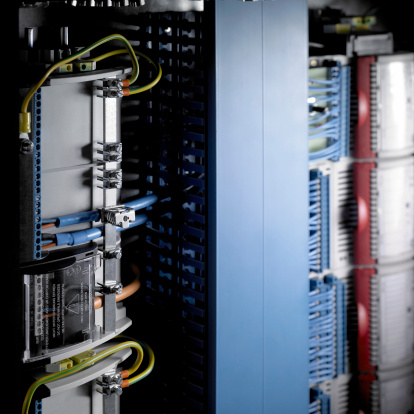
Power Distribution and Electrical Infrastructure Components
Power distribution is the backbone of any data center. Busbars, switchgear assemblies, electrical enclosures, and grounding systems must carry high current loads reliably and continuously while meeting stringent safety and dimensional standards. Investment casting is well suited to these components because it supports the alloys required for electrical performance and produces complex geometry, including integrated mounting flanges, terminal bosses, and housing features, in a single operation.
MPC produces the following power distribution castings for data center applications:
- Busbar components: Precision-cast busbars and busbar connectors in copper alloys and aluminum for power distribution within switchgear, panel boards, and power distribution units (PDUs). Investment casting produces the cross-sections and mounting features required for high-current busbars with less material waste than machining from bar stock.
- Switchgear parts: Housings, brackets, and internal mechanical components for medium- and low-voltage switchgear assemblies. Investment casting allows for complex internal geometry and production of precise mating surfaces consistently across high volumes.
- Electrical enclosure hardware: Mounting brackets, hinges, latches, cable entry components, and structural hardware for electrical enclosures and cabinet assemblies. Cast in stainless steel or aluminum depending on environment and load requirements.
- Grounding components: Ground lugs, bonding connectors, and earthing hardware cast in copper alloys for low-resistance electrical connections. Investment casting produces the dimensional accuracy and surface finish required for reliable grounding terminations.
Cooling System Components
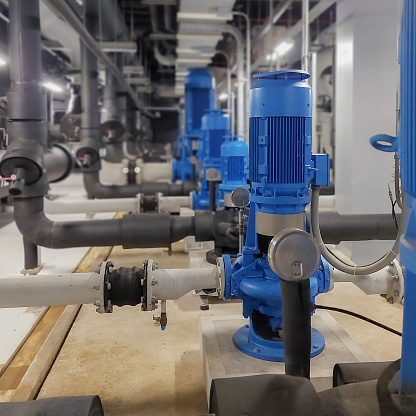
Cooling is the fastest-growing component category in data center construction. As AI workloads drive rack power densities beyond the limits of traditional air cooling, liquid cooling systems are becoming standard in hyperscale and high-performance computing facilities. The precision components within these systems, i.e., manifolds, heat exchangers, fittings, and housings, require exact dimensional control, leak-free integrity, and materials that resist corrosion from coolant fluids.
MPC produces the following cooling system castings:
- Heat exchanger components: End caps, headers, manifold bodies, and structural components for liquid-to-liquid and liquid-to-air heat exchangers. Cast in aluminum or stainless steel to meet the pressure and temperature requirements of the cooling system.
- Liquid cooling system parts: Pump housings, cold plate manifolds, distribution headers, and quick-connect fitting bodies for direct liquid cooling (DLC) and immersion cooling systems. Investment casting supports the complex internal flow geometry required by these components.
- Manifolds and fittings: Precision cast manifold bodies and fluid distribution fittings for coolant loop distribution in rear-door heat exchangers and in-row cooling systems. Tight tolerances ensure leak-free assembly at operating pressures.
- Precision housings: Pump and motor housings, valve bodies, and enclosure components for cooling system ancillary equipment. Investment casting produces the required close-tolerance bore and flange surfaces for these components.
Aluminum A356
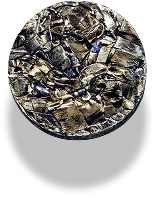
Primary alloy for cooling system components including heat exchanger bodies, cold plate manifolds, and pump housings. Aluminum’s high thermal conductivity, low weight, and castability make it the preferred material for thermal management components in both air and liquid cooling systems.
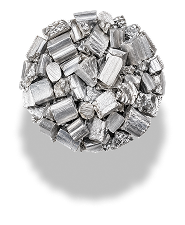
316 Stainless Steel
Cooling system fittings, manifolds, and housings in environments where coolant fluids or condensation present a corrosion risk. Also specified for electrical enclosure hardware in high-humidity or outdoor-adjacent data center installations.
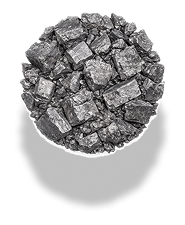
304 Stainless Steel
General-purpose stainless for enclosure hardware, brackets, and mounting components in standard indoor data center environments. Lower cost than 316 where chloride corrosion is not a concern.
Copper Alloys (brass, bronze)
Busbar connectors, grounding components, and electrical terminal hardware where you need high electrical conductivity. Investment casting in copper alloys produces complex connector geometry with better material utilization than machining.
Carbon Steel (4130, 4140)
Structural brackets, rack mounting hardware, and enclosure frames where strength and cost are the primary drivers and corrosion protection is provided by coating or painting.
MPC Capabilities for Data Center Customers

Cooling system alloy expertise
MPC casts heat exchanger components, cold plate manifolds, and pump housings in aluminum A356, the primary alloy for data center thermal management. We produce the complex internal flow geometry these components require with the dimensional accuracy needed for leak-free assembly at operating pressure.

Rapid prototype capability
3D-printed wax patterns allow new cooling or power distribution component designs to be cast and evaluated in days, supporting fast development cycles for data center equipment OEMs and system integrators.
Tight tolerances as-cast
Investment casting tolerances of ±0.005 in/in reduce or eliminate post-cast machining on power distribution and cooling components, lowering per-part cost and compressing lead time.
Full secondary services
MPC coordinates CNC machining, heat treating, passivation, and protective coating, delivering finished components ready for assembly rather than raw castings requiring additional processing.
Domestic manufacturing
All parts are manufactured in Milwaukee, WI. Domestic production eliminates international shipping lead times and simplifies supply chain compliance for US-based data center projects.
High-volume consistency
MPC’s ISO 9001:2015 quality system and robotic shell-dipping process ensure dimensional consistency across large production runs, which is critical for data center builds where components must fit interchangeably across hundreds of identical rack or cooling installations.
ISO 9001:2015 Certified
Every casting is produced and inspected under a documented quality management system certified by Intertek. Full traceability and documentation are available for your convenience and peace of mind.
Frequently Asked Questions
Common Questions
Before Requesting
a Quote
What investment castings does MPC produce for data center applications?

Which alloys does MPC cast for data center components?

Why is investment casting used for data center cooling components?

Can MPC produce data center components at high volume?
Does MPC offer prototyping for new data center component designs?
What secondary operations does MPC offer for data center castings?
What data center applications does MPC supply castings for?
MPC produces investment castings for power distribution and cooling system applications across hyperscale data center, colocation, and high-performance computing installations. Contact our engineering team to discuss your specific application and component requirements.
How do I get a quote for data center investment castings?
Get a Quote
Request a Precision
Casting Quote
Upload your drawings or project requirements and our engineering team will review your application — providing technical feedback, material recommendations, and competitive pricing.

Fast RFQ Response
Typical quote turnaround within 1–2 business days
Engineering Support
DFM review and casting optimization included with every quote
Scalable Production
Prototype to high-volume production capability
Full Technical Consultation
Material selection, tolerance review, and process recommendations